In emergencies, hesitation can cost lives. Whether it’s cardiac arrest, severe trauma, or a remote medical crisis, having the right skills is not just important—it’s essential. With over 10 years of experience, Sierra International Medical Training Solutions provides expert-led courses like AHA-certified CPR, BLS, ACLS, and Tactical Combat Casualty Care (TCCC) to equip first responders, medical professionals, and tactical personnel with life-saving skills needed to act decisively in critical situations.
OUR COURSES

AHA First Aid CPR And AED Provider
This course is designed for anyone with little or no medical training who needs a course completion card for job, regulatory (e.g., OSHA), or other requirements.
Duration: 4.5-6 hrs

AHA Basic Life Support (BLS)
This course is required for individuals working in healthcare settings such as hospitals, clinics, dental offices, and prehospital environments.
Duration 5-6 hrs

AHA Advanced Cardiovascular Life Support (ACLS)
This course builds on the foundation of Basic Life Support (BLS), emphasizing advanced interventions, clinical decision-making, and effective team dynamics.
Duration: 2 days

Tactical Combat Casualty Care – Combat Lifesaver (TCCC-CLS)
TheCourse by the National Association of Emergency Medical Technicians (NAEMT) is a hands-on, scenario-based training program designed to equip non-medical military personnel and first responders with lifesaving medical skills to manage trauma in combat and hostile environments.
Duration : 5 Days

Tactical Combat Casualty Care – Combat Medic/Corpsman
It is designed specifically for military medical personnel—combat medics, corpsmen, and pararescue personnel—who are responsible for providing prehospital trauma care on the battlefield.
Duration : 8 Days

TCCC – All Service Members (ASM) Tier 1
Tactical Combat Casualty Care (TCCC) – All Service Members (ASM) Tier 1 is designed to equip military personnel, law enforcement officers, security professionals, and responders operating in high-threat environments with essential, life-saving medical skills.
Duration: 1 Day (approximately 6–8 hours)
Disaster Medical Assistance Team (DMAT)
The course designed to prepare healthcare professionals and emergency responders to operate effectively during large-scale disasters and public health emergencies. Combining online theoretical modules with intensive in-person practical sessions.
Duration: 3 Days

Rope Rescue Training (Basic)
This program is ideal for emergency responders, search and rescue personnel, outdoor professionals, and anyone involved in technical rescue scenarios.
Duration: 3 Days

Rope Rescue Training (Advanced)
Program designed for experienced rescue personnel seeking to expand their technical capabilities in complex rope rescue scenarios. Building on the fundamentals, this course focuses on high-angle rescue operations, advanced rigging systems, and problem-solving in challenging environments.
Duration: 3 Days
Remote and Austere Medical Responder Training Program
The Remote and Austere Medical Responder Training Program is a comprehensive 3-day course designed to prepare participants to deliver life-saving care in challenging, resource-limited, and hostile environments.
Duration: 3 Days
Tactical Emergency Casualty Care (TECC) for Law Enforcement Officers
The Tactical Emergency Casualty Care (TECC) for Law Enforcement Officers course is a comprehensive 2-day training program designed to equip law enforcement personnel with lifesaving medical skills for high-threat and active threat environments.
Duration: 2 Days
Tactical Emergency Casualty Care (TECC) BLS / ALS Provider
The TECC BLS / ALS Provider course is a focused 3-day program designed for EMTs, paramedics, nurses, and physicians operating in high-threat and dynamic environments.
Duration: 3 Days
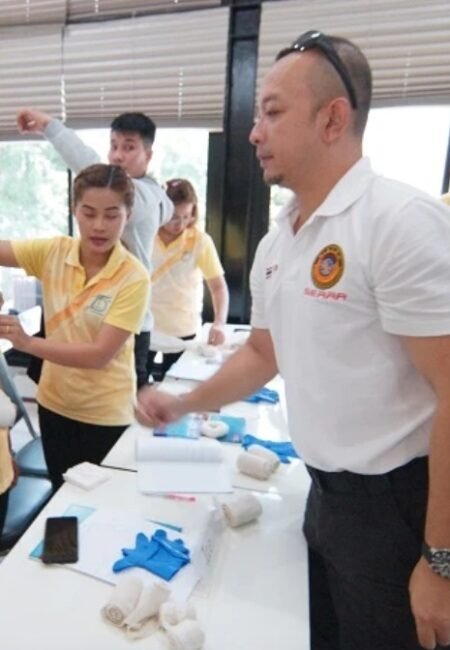
American Heart Association (AHA)
AHA Heartsaver First Aid CPR AED Class.
AHA Heartsaver® First Aid CPR AED Course Description
The Heartsaver® First Aid CPR AED course by the American Heart Association (AHA) is designed for anyone with little or no medical training who needs a course completion card for job, regulatory (e.g., OSHA), or other requirements. This course empowers participants with the essential skills to respond confidently and effectively to a wide range of emergency situations in the workplace or community.
✅ Course Content Includes:
- First Aid Basics
- Scene safety and assessment
- Calling for help (EMS activation)
- Medical emergencies (e.g., breathing problems, seizures, stroke, diabetes)
- Injury emergencies (e.g., bleeding, burns, broken bones, head injuries)
- Environmental emergencies (e.g., heat/cold-related illness, poison)
- CPR and AED Use
- High-quality adult CPR
- Child and infant CPR (optional)
- Use of an automated external defibrillator (AED)
- Relief of choking in responsive and unresponsive victims (adult, child, infant)
⏱️ Course Duration:
Classroom-based training: Approximately 4.5 – 6 hours depending on modules selected
🎓 Certification:
AHA eCard issued upon successful completion
Valid for 2 years
👥 Who Should Take This Course:
Teachers, security personnel, coaches, lifeguards, office staff, construction workers, babysitters, and members of the general public
Anyone who wants or is required to be prepared for emergencies.
AHA Basic Life Support (BLS) Provider
Course Description
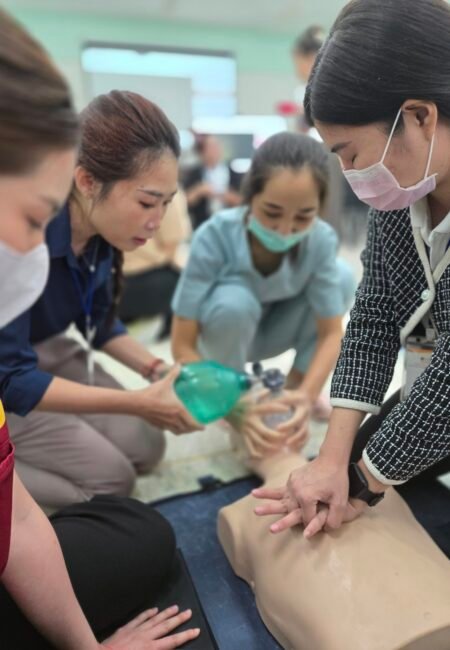
The American Heart Association (AHA) Basic Life Support (BLS) Provider Course trains healthcare professionals and other personnel to recognize and respond to life-threatening emergencies with high-quality cardiopulmonary resuscitation (CPR), use of an automated external defibrillator (AED), and effective teamwork.
This course is required for individuals working in healthcare settings such as hospitals, clinics, dental offices, and prehospital environments.
✅ Course Content Includes:
• High-quality CPR for adults, children, and infants
• Use of an AED
• Effective ventilations using barrier devices
• Team dynamics and communication in resuscitation
• Relief of foreign-body airway obstruction (choking)
• Resuscitation techniques for healthcare providers
Format & Assessment:
• Hands-on, instructor-led class with skills practice and testing
• Multiple-choice written exam (optional in some cases)
• Students must pass both a skills test and knowledge exam to earn certification
🧭 Course Duration:
• Initial course: Approximately 5 – 6 hours
🎓 Certification:
• AHA BLS Provider eCard issued upon successful completion
• Valid for 2 years
Who Should Take This Course:
• Doctors, nurses, EMTs, paramedics, dentists, physiotherapists, medical students
• Any healthcare provider or public safety professional requiring BLS certification
AHA Advanced Cardiovascular Life Support (ACLS)
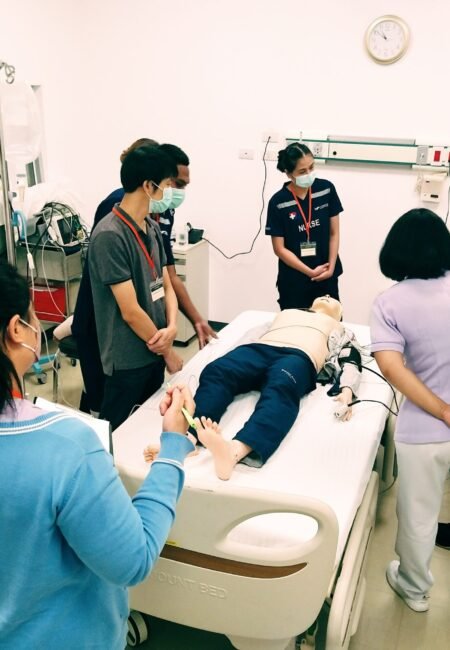
The Advanced Cardiovascular Life Support (ACLS) Provider Course by the American Heart Association (AHA) is designed for healthcare professionals who direct or participate in the management of cardiopulmonary arrest, resuscitation, or other cardiovascular emergencies.
This course builds on the foundation of Basic Life Support (BLS), emphasizing advanced interventions, clinical decision-making, and effective team dynamics.
✅Course Content Includes:
- High-quality BLS and early recognition of cardiac arrest
- Management of respiratory arrest and peri-arrest conditions
- Recognition and management of ACS (acute coronary syndromes) and stroke
- Airway management and related pharmacology
- Megacode practice and team-based resuscitation
- Effective communication as a member and leader of a resuscitation team
- Use of ECG to recognize cardiac rhythms (bradycardia, tachycardia, etc.)
- Administration of ACLS medications during emergencies
🎓 Format & Assessment:
- Instructor-led classroom course with hands-on simulation
- Written multiple-choice exam
- Practical skills assessment, including Megacode
🧭 Course Duration:
- Full Provider Course: 2 days (approximately 10–12 hours total)
- Renewal Course: 1 day (approximately 6–8 hours)
- Blended Learning Option: Online theory + in-person skills check
🎓 Certification:
- AHA ACLS Provider eCard awarded upon successful completion
- Valid for 2 years
👥 Who Should Attend:
- Physicians, nurses, paramedics, anesthetists, emergency personnel
- Any healthcare provider involved in advanced cardiac care or emergency response
Tactical Combat Casualty Care - Combat Lifesaver (TCCC-CLS)
NAEMT Accredited | Based on Committee on TCCC Guidelines
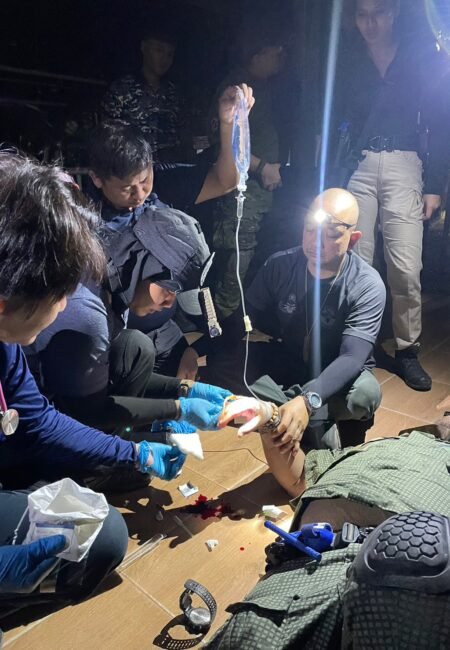
The TCCC-CLS Course by the National Association of Emergency Medical Technicians (NAEMT) is a hands-on, scenario-based training program designed to equip non-medical military personnel and first responders with lifesaving medical skills to manage trauma in combat and hostile environments.
This course is based on the latest guidelines from the Committee on Tactical Combat Casualty Care (Co-TCCC) and is tailored for individuals who may be the first to provide care for a wounded teammate before evacuation or access to advanced care.
✅ Course Objectives:
- Deliver immediate, life-saving interventions in a tactical environment
- Improve survivability of casualties through proper hemorrhage control, airway management, and treatment of preventable causes of death
- Enhance combat readiness and self-aid/buddy-aid capabilities
Topics Covered:
- Introduction to Tactical Combat Casualty Care (TCCC) Phases
- Care Under Fire
- Rapid threat assessment
- Suppression of hostile fire
- Tourniquet application
- Tactical Field Care
- Airway management (NPA, recovery position)
- Breathing assessment and chest seal application
- Hemorrhage control (hemostatics, pressure dressings)
- Hypothermia prevention and shock management
- Pain control and wound dressing
- Tactical Evacuation Care
- Casualty movement and evacuation techniques
- Communication with medical evacuation teams (MEDEVAC)
- Nine-line and MIST reports
👥 Target Audience:
- Military personnel (combat and support roles)
- Law enforcement tactical teams
- Private security contractors
- Border security and special operations personnel
- Anyone designated as a Combat Lifesaver (CLS) or first-line responder in tactical environments
🧭 Course Duration:
- 5 days (approximately 40 hours)
🎓 Certification:
- NAEMT Certificate of Completion
- Valid for 3 years
- Issued upon successful completion of practical and written assessments
Methodology:
- Interactive lectures, trauma lanes, and tactical medical simulations
- Emphasis on hands-on training, teamwork, and realistic battlefield scenarios
This course empowers individuals with the confidence and competence to “save lives on the battlefield” before definitive care arrives. Based on real-world data and proven techniques, TCCC-CLS bridges the gap between initial wounding and advanced medical support.

Tactical Combat Casualty Care – Combat Medic/Corpsman (TCCC-CMC)
NAEMT Accredited | Based on Committee on TCCC Guidelines
The TCCC-CMC Course is an advanced trauma care training program developed by the National Association of Emergency Medical Technicians (NAEMT) and based on the latest evidence-based guidelines from the Committee on Tactical Combat Casualty Care (Co-TCCC). It is designed specifically for military medical personnel—combat medics, corpsmen, and pararescue personnel—who are responsible for providing prehospital trauma care on the battlefield.
TCCC-CMC prepares these frontline providers to manage combat trauma in austere, resource-limited, and high-threat environments. It emphasizes prolonged field care, damage control resuscitation, and lifesaving interventions under fire.
✅ Course Objectives:
- Apply advanced trauma life support principles in tactical settings
- Deliver prolonged casualty care when evacuation is delayed
- Perform lifesaving interventions using Co-TCCC medical protocols
- Coordinate with medical evacuation and higher levels of care
- Improve survivability through mission-specific trauma training
✅ Core Topics Covered:
The three phases of TCCC:
- Care Under Fire
- Tactical Field Care
- Tactical Evacuation Care
- Advanced airway management techniques (supraglottic, surgical)
- Needle decompression and chest seal application for tension pneumothorax
- Control of massive hemorrhage (tourniquets, junctional devices, hemostatics)
- IV/IO access and fluid resuscitation protocols (TXA, blood products)
- Pain management in combat environments
- Hypothermia prevention and burn care
- Casualty documentation (TCCC card, MIST report)
- Prolonged Field Care (PFC) concepts
- Role of medics in team dynamics and mission success
👥 Target Audience:
- Combat medics, corpsmen, pararescuemen (PJ)
- Tactical EMS providers
- Special operations medical personnel
- Military physicians and advanced practice providers assigned to operational roles
⏱️ Course Duration:
- 8 days
🎓 Certification:
- NAEMT Certificate of Completion
- Based on Co-TCCC guidelines
- Recognized internationally by military and tactical medical organizations
🔧 Training Methodology:
- Realistic battlefield simulations
- Hands-on skills stations and trauma lanes
- Case-based discussions and tactical scenario debriefings
- Emphasis on decision-making under stress andteam coordination.
TCCC – All Service Members (ASM) Tier 1
🧭 Duration: 1 Day (approximately 6–8 hours)
Tactical Combat Casualty Care (TCCC) – All Service Members (ASM) Tier 1 is designed to equip military personnel, law enforcement officers, security professionals, and responders operating in high-threat environments with essential, life-saving medical skills. This foundational course focuses on preventing the leading causes of combat and tactical environment deaths through simple, effective, and evidence-based interventions that can be performed before advanced medical care is available. Participants will gain confidence to respond quickly, decisively, and safely under fire or in hostile conditions.
Course Duration
This is a 1-day program (approximately 6–8 hours) consisting of classroom learning, hands-on skill stations, and scenario-based practical training.
Course Content
Participants will learn and practice:
- Principles of Tactical Combat Casualty Care
- Threat assessment and personal safety during care under fire
- Hemorrhage control using tourniquets, pressure dressings, and wound packing
- Basic airway positioning and breathing assessment
- Casualty movement and extraction under threat
- Hypothermia prevention and casualty monitoring
- Communication and handover principles in tactical environments
Training is delivered by experienced instructors with real-world tactical and prehospital backgrounds, ensuring realistic learning and strong skill application.
Disaster Medical Assistance Team (DMAT) Training Program
🧭 Duration: 3 Days (Blended Learning)
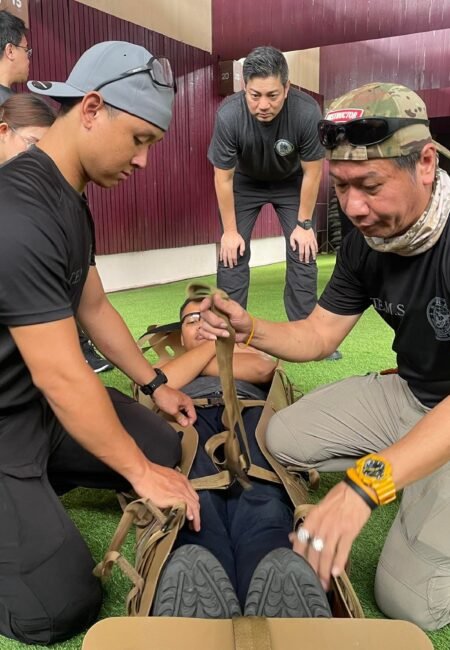
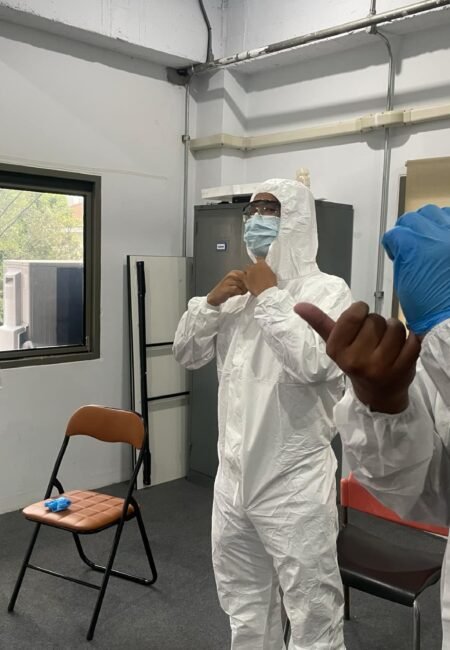
The Disaster Medical Assistance Team (DMAT) Training Program is a 3-day blended learning course designed to prepare healthcare professionals and emergency responders to operate effectively during large-scale disasters and public health emergencies. Combining online theoretical modules with intensive in-person practical sessions, this program delivers both foundational knowledge and hands-on skills required in disaster response environments.
Participants will learn principles of mass casualty triage, field medical operations, incident command systems, coordination with national and international agencies, and the management of both trauma and medical emergencies under disaster conditions. The course emphasizes teamwork, rapid deployment readiness, and medical care continuity in austere, high-pressure environments.
This program is ideal for professionals seeking to serve as part of national or regional disaster medical teams, humanitarian response units, or emergency medical services in crisis settings.
Rope Rescue Training (Basic)
🧭 Duration: 3 Days
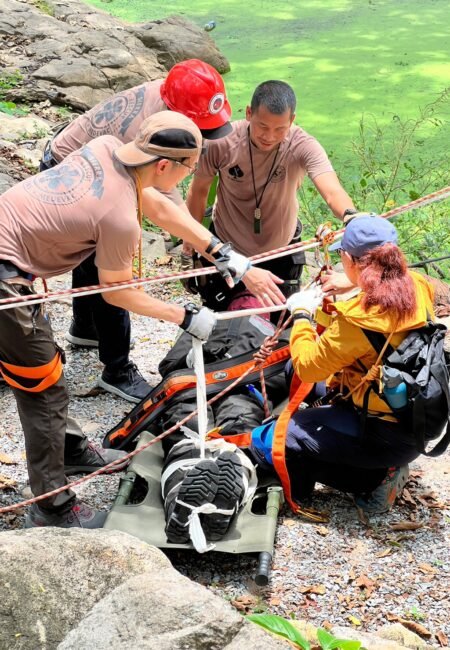
The Basic Rope Rescue Training is a 3-day hands-on course designed to introduce participants to the fundamental skills and techniques required for safe and effective rope-based rescue operations. This program is ideal for emergency responders, search and rescue personnel, outdoor professionals, and anyone involved in technical rescue scenarios.
Participants will learn essential concepts including rope systems, knots and anchors, belaying, rappelling, mechanical advantage systems, and low-angle rescue techniques. Emphasis is placed on safety, team coordination, and equipment handling in both simulated and real-world environments.
By the end of the course, learners will have the confidence and competence to perform basic rope rescue tasks, operate safely around heights, and support more advanced technical rescue operations.
Rope Rescue Training (Advanced)
🧭 Duration: 3 Days
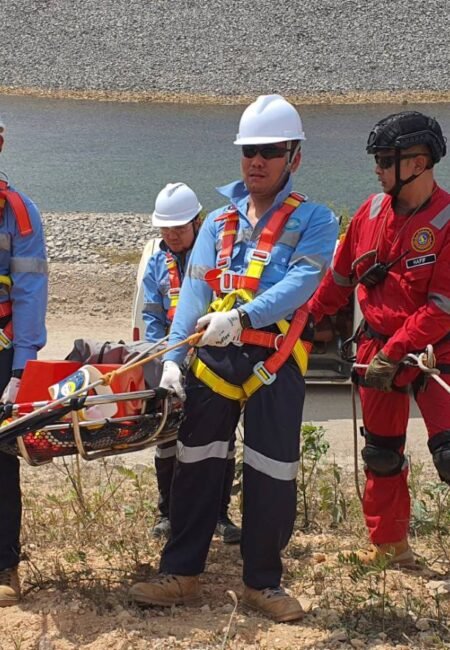
The Advanced Rope Rescue Training is an intensive 3-day program designed for experienced rescue personnel seeking to expand their technical capabilities in complex rope rescue scenarios. Building on the fundamentals, this course focuses on high-angle rescue operations, advanced rigging systems, and problem-solving in challenging environments.
Participants will train in vertical rescue, high-line systems (including horizontal and diagonal offsets), pick-offs, confined space rope access, team-based rescue strategies, and incident command integration. Realistic scenarios and performance-based assessments will challenge participants to think critically and operate efficiently under pressure.
Ideal for firefighters, SAR teams, tactical medics, and rope rescue technicians, this advanced course enhances operational readiness for high-risk, technical rescue missions. Prior completion of a basic rope rescue course or equivalent experience is strongly recommended.
Tactical Emergency Casualty Care (TECC) BLS / ALS Provider
🧭 Duration: 3 Days
The TECC BLS / ALS Provider course is a focused 3-day program designed for EMTs, paramedics, nurses, and physicians operating in high-threat and dynamic environments. The course adapts evidence-based emergency medical care to active threat, tactical, and mass casualty incidents, emphasizing provider safety, rapid decision-making, and reduction of preventable deaths. Participants gain practical skills through hands-on training and realistic scenarios, preparing them to integrate effectively with law enforcement and rescue teams.
Course Outline (Summary)
- TECC principles & threat assessment (Hot, Warm, Cold zones)
- Hemorrhage control (tourniquets, wound packing, pressure dressings)
- Airway & breathing management (BLS and ALS considerations)
- Chest trauma, shock, and circulation management
- Casualty movement, evacuation & triage
- Tactical evacuation care & team coordination
- Scenario-based training and skills validation
This course equips BLS and ALS providers with the confidence and capability to deliver effective medical care in complex, high-risk operational settings.
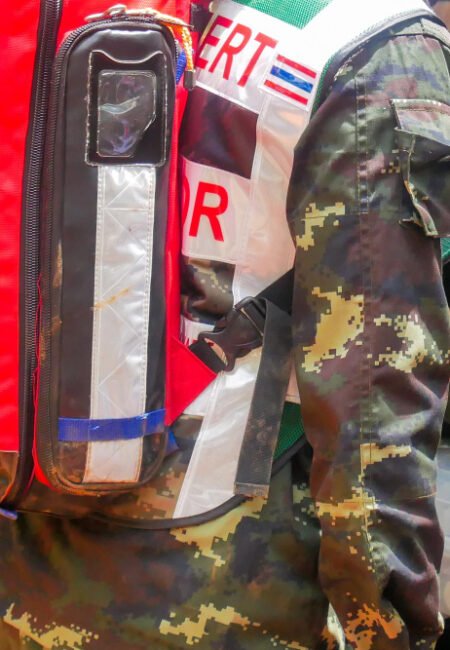

Remote and Austere Medical Responder Training Program
🧭 Duration: 3 Days
The Remote and Austere Medical Responder Training Program is a comprehensive 3-day course designed to prepare participants to deliver life-saving care in challenging, resource-limited, and hostile environments. Tailored for medics, first responders, humanitarian workers, and remote-area professionals, this program equips learners with the skills to assess, stabilize, and manage patients when definitive care is delayed or unavailable.
Participants will undergo intensive, hands-on training in field trauma management, prolonged field care, environmental emergencies, patient evacuation, improvisation techniques, and tactical decision-making under pressure. Realistic scenarios, including nighttime drills and stress-based simulations, enhance confidence and competence in remote and austere settings.
Whether you operate in the jungle, desert, mountains, maritime zones, or conflict areas—this training builds your readiness to respond when help is hours or days away
Tactical Emergency Casualty Care (TECC) for Law Enforcement Officers
🧭 Duration: 2 Days
The Tactical Emergency Casualty Care (TECC) for Law Enforcement Officers course is a comprehensive 2-day training program designed to equip law enforcement personnel with lifesaving medical skills for high-threat and active threat environments. Based on current civilian TECC principles, this course focuses on the prevention of preventable death through rapid threat assessment, effective bleeding control, airway management, casualty movement, and coordinated medical response during dynamic incidents. Participants will learn to operate safely within hot, warm, and cold zones, integrate medical care with tactical objectives, and apply care under fire principles relevant to law enforcement operations. Through hands-on skills training, realistic scenarios, and practical decision-making exercises, officers gain the confidence and competence to manage casualties, protect themselves and others, and improve survivability until advanced medical support arrives.